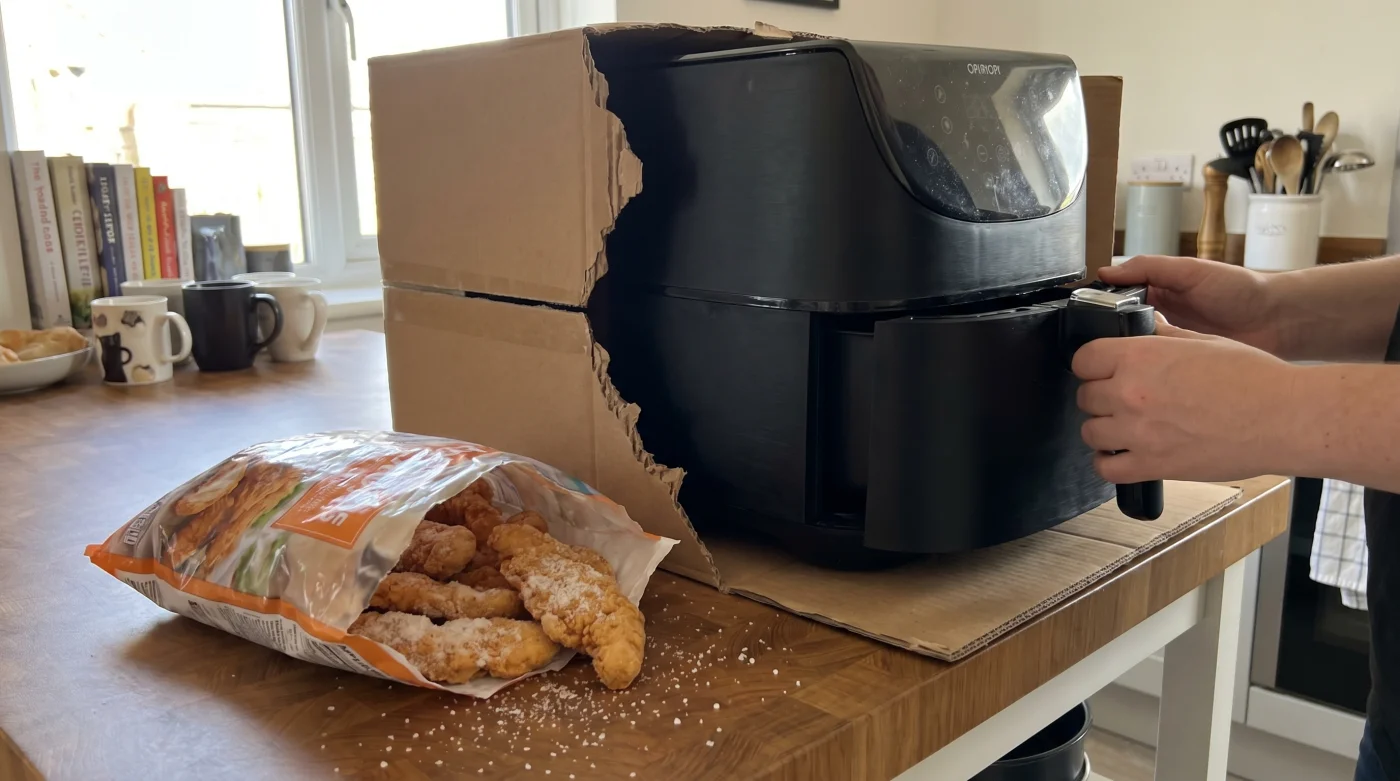
The hum of the kitchen fan, the satisfying ding, the waft of hot, crispy breading filling the evening air. The air fryer sits on the granite counter like a matte-black monolith of modern virtue. It promised you the impossible: all the golden, crackling joy of a deep fryer with zero guilt. You brought it home with visions of perfectly roasted zucchini and lean chicken breasts dancing in your head.
You open the drawer and a cloud of hot steam hits your face, revealing perfectly browned tenders. The illusion is perfectly engineered. You feel like you have hacked the system, turning a heavy pub-style dinner into a Tuesday night wellness routine without breaking a sweat.
But the reality hiding inside that non-stick basket is far more complicated. The appliance itself is not the problem; it is a brilliant convection oven that speeds up cooking times and crisps edges beautifully. Yet, the psychology of owning one quietly reshapes the way you shop and eat, manipulating your daily routines without you ever noticing.
The promise of oil-free cooking acts like a psychological permission slip. Without realizing it, you drift toward the freezer aisle. The absence of frying oil masks a sudden, staggering influx of processed, hyper-palatable foods into your weekly rotation, changing the very foundation of your diet.
The Halo Effect in Your Kitchen
Think of the air fryer like a sports car. Just because it can go fast does not mean you should drive it at 120 miles per hour through a residential neighborhood. When you remove the friction of heating up a large oven or managing vats of hot oil, you inadvertently remove the natural barriers that keep convenience foods as occasional treats rather than daily staples.
The shift is subtle at first. You buy a bag of frozen sweet potato fries because, after all, you are cooking them with hot air now. The cooking method feels virtuous. But soon, the freezer fills with breaded shrimp, mozzarella sticks, and processed chicken nuggets. The basket demands to be filled, and frozen bags are the easiest answer.
The appliance creates a powerful regret shield. Because you aren’t submerging food in peanut or canola oil, your brain registers the meal as a net positive. As a result, buyers end up consuming double the sodium and preservatives within the first month of ownership, completely offsetting the calories saved from skipping the deep fryer. You trade one health concern for another, entirely by accident.
- KitchenAid stand mixers use nylon gears to prevent catastrophic motor failure
- Ninja Creami machines see unprecedented price spikes amid summer appliance shortages
- Stanley Quencher cups trigger a massive retail inventory panic this week
- Dyson V15 vacuums restrict maximum suction to preserve the lithium battery
- Cast iron skillets stripped with oven cleaner perform better than new
Sarah Jenkins, a 42-year-old clinical dietitian working in Chicago, sees this exact pattern play out every January. “I have clients who buy an air fryer to kickstart a health goal,” she notes. “Three weeks later, their cholesterol hasn’t moved, but their blood pressure is spiking. We look at their food logs, and it is a parade of frozen, pre-breaded foods. The appliance changed their habits, but not in the direction they intended.” The air fryer did not teach them to roast fresh vegetables; it taught them to heat up processed snacks faster.
The Three Buyer Traps
Not everyone falls into the exact same routine. How you use your appliance largely depends on the specific friction you are trying to avoid in the kitchen. Recognizing your specific vulnerability is the first step toward correcting the behavior.
For the Busy Parent: You bought it to get dinner on the table before soccer practice. The trap here is the kid-friendly freezer staples. You might start with fresh chicken breast, but exhaustion quickly steers you toward bagged, pre-seasoned meats. The salt content silently compounds, turning a simple protein meal into a sodium bomb that leaves everyone feeling sluggish.
For the Comfort Seeker: You crave the textures of takeout without the delivery fees. The air fryer excels at reheating and crisping, which encourages hoarding frozen appetizers. The lack of visible oil convinces you that a plate of daily jalapeño poppers is a reasonable afternoon snack, completely warping your perception of portion control.
For the Fitness Tracker: You use the air fryer to meal prep lean meats and vegetables. However, the aggressive convection fan quickly dries out fresh produce. Frustrated by rubbery broccoli, you revert to engineered alternatives like processed veggie patties that are bound together with starches and seed oils just to survive the high-velocity heat.
Recalibrating Your Appliance
You do not need to banish the machine to a dusty garage shelf. You simply need to reframe it as a tool for raw ingredients rather than a reheating station for factories. It requires a shift from passive consumption to mindful preparation.
Begin by treating the air fryer exactly as you would a traditional oven. If a food comes in a bag with a paragraph-long ingredient list, it belongs in the minority of your meals. Focus on applying high, circulating heat to single-ingredient items that you have seasoned yourself.
Mastering the machine requires a few intentional adjustments to your prep work. You must learn to work with the intense air currents rather than fighting against them.
- Toss fresh, chopped vegetables in a light coating of avocado oil; the fat is necessary to conduct heat and prevent the fan from dehydrating the produce.
- Use a digital meat thermometer. The intense air currents cook the outside of proteins aggressively, often leaving the center raw while the exterior looks fully done.
- Drop the temperature by 25 degrees Fahrenheit from what a standard recipe suggests to account for the proximity of the heating element.
The Tactical Toolkit: Keep a small spray bottle of olive oil, a reliable instant-read thermometer, and a silicone liner nearby. These three items force you to interact with raw ingredients directly, breaking the cycle of tearing open freezer bags and dumping them into the basket.
The True Value of Countertop Space
We want technology to solve our human fatigue. It is deeply appealing to believe that a plastic basket and a heating coil can neutralize the nutritional toll of our favorite comfort foods. But real nourishment requires a little bit of friction, a little bit of honesty about what we are actually putting on our plates.
When you strip away the marketing halo, you are left with a highly efficient mini-oven. Embrace it for what it is. Let it roast your Brussels sprouts in half the time, let it blister the skin on a fresh piece of salmon, but do not let it dictate your grocery list. True convenience isn’t found in a cardboard box from the freezer aisle; it is found in knowing exactly how to command the tools in your kitchen.
“The greatest trick modern appliance marketing ever pulled was convincing us that the method of cooking matters more than the quality of the ingredient itself.”
| Kitchen Habit | The Air Fryer Trap | The Mindful Adjustment |
|---|---|---|
| Craving a Crunch | Buying bagged, pre-seasoned frozen fries high in sodium. | Slicing fresh potatoes and tossing in one teaspoon of salt and olive oil. |
| Weeknight Proteins | Relying on breaded chicken patties to save prep time. | Marinating raw chicken thighs; utilizing the fast cook time to lock in moisture. |
| Snack Urges | Grazing on frozen mozzarella sticks because they cook in six minutes. | Roasting spiced chickpeas for a fibrous, whole-food alternative. |
Common Air Fryer Concerns
Does air frying destroy nutrients? Like any high-heat cooking method, some water-soluble vitamins can degrade, but it retains more nutrients than boiling or deep-frying.
Why does my fresh food always dry out? The high-speed fan strips moisture from the surface. You must use a small amount of oil to create a protective barrier on fresh produce and meats.
Is the non-stick coating toxic? Most modern baskets use ceramic or PTFE coatings. They are safe under normal temperatures, but always avoid preheating an empty basket for prolonged periods.
Can I actually bake in it? Yes, the convection environment is excellent for small batches of muffins or cookies, though you must lower the temperature and check them early.
How do I stop relying on frozen foods? Relocate the appliance away from your microwave and place it near your cutting board to visually associate it with fresh food prep.