The fluorescent lights of the checkout lane always cast the same sterile glow over the conveyor belt. You watch the red laser drag across barcodes, listening to that rhythmic, high-pitched chirp that signals your weekly budget slowly draining away. Most shoppers simply stare at the mounting total, resigning themselves to the cost of feeding a family or stocking a pantry.
But if you watch the seasoned bargain hunters, you notice something strange happening at the terminal. The total collapses almost entirely. They walk out with heavy bags, yet their bank accounts remain untouched. The register beeps approval, completely unaware of the arbitrage that just occurred.
We are taught to view a gift card as a lazy birthday present or a fixed unit of currency. It sits in your wallet, holding a flat fifty dollars, waiting to be traded for fifty dollars worth of detergent or coffee. Yet, the moment you slide that card into a specific sequence of modern retail mechanics, it stops acting like simple money.
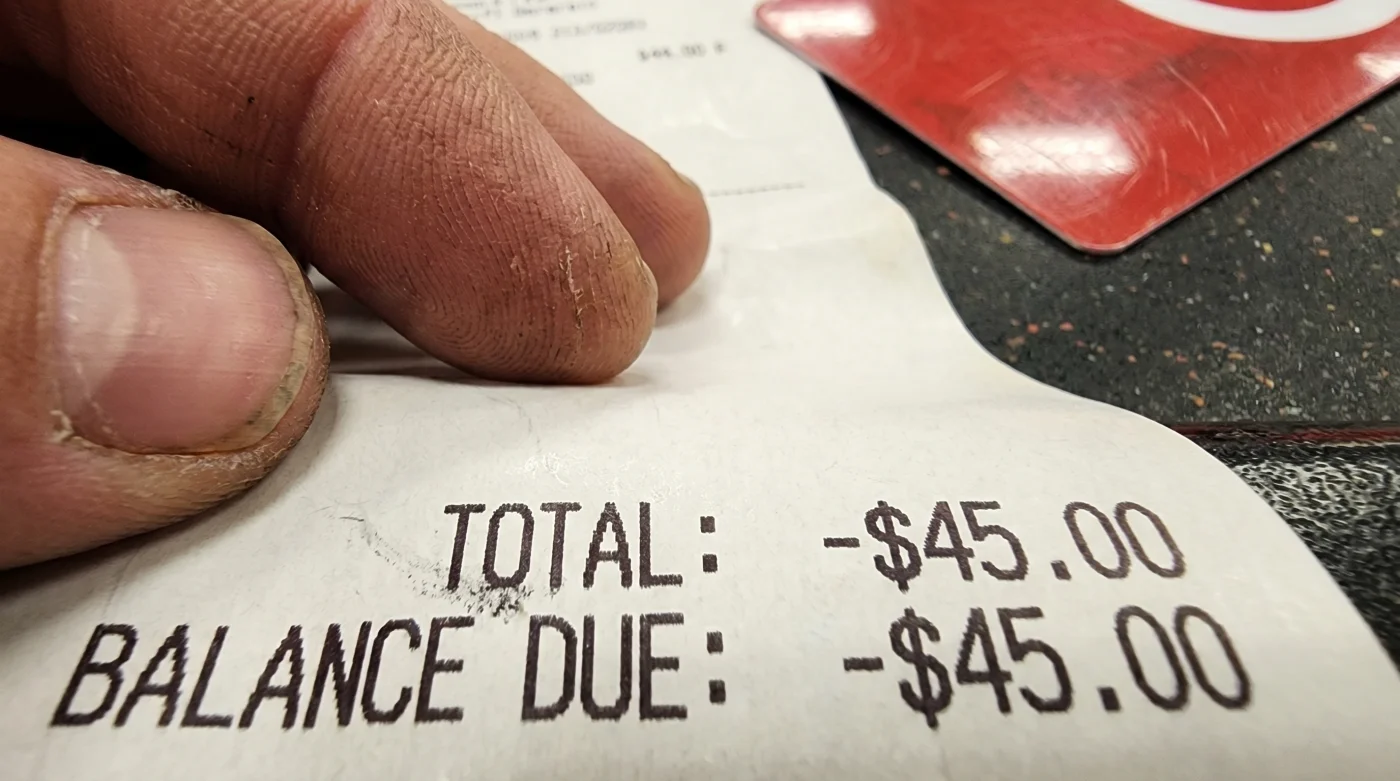
By exploiting how digital registers process different forms of payment, that unassuming plastic rectangle bypasses the rigid rules of manufacturer caps. It yields negative-cost items, turning a routine grocery run into an exercise in quiet financial leverage. It acts as a wedge in the system.
The Blind Spot in the Machine
Think of the modern checkout terminal as an overwhelmed toll booth operator. When you hand over a manufacturer coupon, the system verifies the item and deducts the value. It explicitly forbids you from stacking another identical coupon. The gates close, and the programmed rules are strictly enforced.
But the system has a gaping blind spot when it comes to the final settlement. Coupons ignore secondary payment methods. The register does not care if the remaining balance is paid with cash, a high-interest credit card, or a gift card you acquired for twenty percent below its face value online.
Sarah Jenkins, a 38-year-old inventory analyst in Chicago, noticed this discrepancy while auditing point-of-sale software for major big-box stores. She realized that cash registers process discounts and payments in two entirely isolated sandboxes. ‘The rebate app sees what you bought, not how you paid,’ she noted in a forum post that quietly circulated among extreme savers. ‘When you stack a manufacturer rebate against a discounted Target gift card, the math breaks in your favor.’
Applying this loophole requires a slight shift in how you plan your weekly trips. Your approach dictates the profit. You have to match your buying habits to the appropriate layer of this system to maximize the return on your time.
Tailoring the Arbitrage
If you only buy necessities like paper towels and dish soap, your focus remains on digital manufacturer rebates found within store apps. You load these digital offers before you walk through the automatic doors. You pay the remaining balance with a gift card you bought online at a steep markdown, effectively double-dipping on the discount without triggering an override at the register.
For the bulk strategist, the stakes are slightly higher and the sequence requires more precision. You sequence third-party rebates carefully. You buy the discounted card, clip the store-level digital coupon, and immediately scan your physical receipt into an external rebate application when you get back to your car.
Executing the Negative-Cost Stack
The physical act of checking out must be deliberate. You cannot rush the terminal or let the cashier dictate the pace of the transaction. If you present your payment methods out of order, the software categorizes the transaction differently, shutting down the overlap and charging you the standard retail rate. It is like mixing a delicate dough; the sequence of ingredients prevents the entire mixture from seizing.
Approach the register with your sequence memorized to prevent the system from resetting. Patience ensures the seamless overlap.
- Scan your physical items first, ensuring the system registers the full retail weight of the purchase and categorizes the inventory correctly.
- Present your digital store barcode or enter your phone number to trigger the internal manufacturer coupons, letting the subtotal drop organically.
- Wait for the terminal to prompt for final payment before introducing any external tender.
- Swipe or scan the discounted Target gift card to clear the remaining balance, paying only pennies on the dollar for the final sum.
- Retain the physical receipt to process through secondary rebate platforms before the ink fades, capturing the final layer of return.
Tactical Toolkit: Keep a dedicated digital folder on your phone containing your secondary rebate apps, organized by payout speed. Maintain a rolling inventory of gift cards purchased at ten to fifteen percent discounts from verified resale exchanges, treating them like a high-yield savings account for groceries. Always check the expiration dates on your digital manufacturer offers before leaving the parking lot, as systems update at midnight.
Mastering this sequence feels entirely different than clipping paper coupons at the kitchen table. It requires no scissors and leaves no paper trail. You stop playing their game. The store layout, the endcap displays, the carefully calculated pricing strategies all lose their psychological grip when you understand how the underlying software actually operates. You view the store as a puzzle rather than a trap.
Reclaiming the Margin
You are no longer just a passive consumer reacting to a brightly colored price tag. You are actively participating in the transaction’s architecture, observing the rigid rules of the register and slipping right through the cracks. It brings a strange sense of peace to an otherwise stressful weekly chore.
By recognizing that secondary payment methods hold untapped leverage, you change the nature of the checkout aisle. You quietly reclaim your margin, keeping household funds where they belong while still walking out the door with everything you need. The machine simply processes the plastic, completely blind to the brilliant math you just executed.
‘The register only reads the barcode, it never asks where the plastic came from.’
| Key Point | Detail | Added Value for the Reader |
|---|---|---|
| Isolated Sandboxes | POS systems process coupons separately from payment methods. | Allows stacking of digital rebates with discounted gift cards. |
| Discounted Plastic | Buying gift cards on resale markets instantly drops the retail baseline. | Creates an immediate 10-15% buffer before any coupons are applied. |
| Third-Party Scanning | External apps refund based on the printed receipt total. | Pushes highly discounted items into negative-cost territory. |
Frequently Asked Questions
Will the register flag my transaction if I use a discounted gift card? No. The point-of-sale system simply registers the card as valid tender, completely blind to what you originally paid for it.
Can I use multiple gift cards in a single checkout? Yes. Most major retailers allow you to swipe multiple gift cards to cover a single balance.
Do manufacturer rebates explicitly ban gift card payments? No. Manufacturer rebates are tied to the item’s barcode and purchase history, not the specific tender used to settle the final bill.
What happens if the rebate exceeds the cost of the item? When stacking correctly, the excess value often absorbs the cost of other items in your cart, or sits as a positive balance in your external rebate app.
Where is the safest place to buy discounted physical cards? Stick to verified, heavily moderated exchanges that offer buyer protection guarantees on the loaded balances.