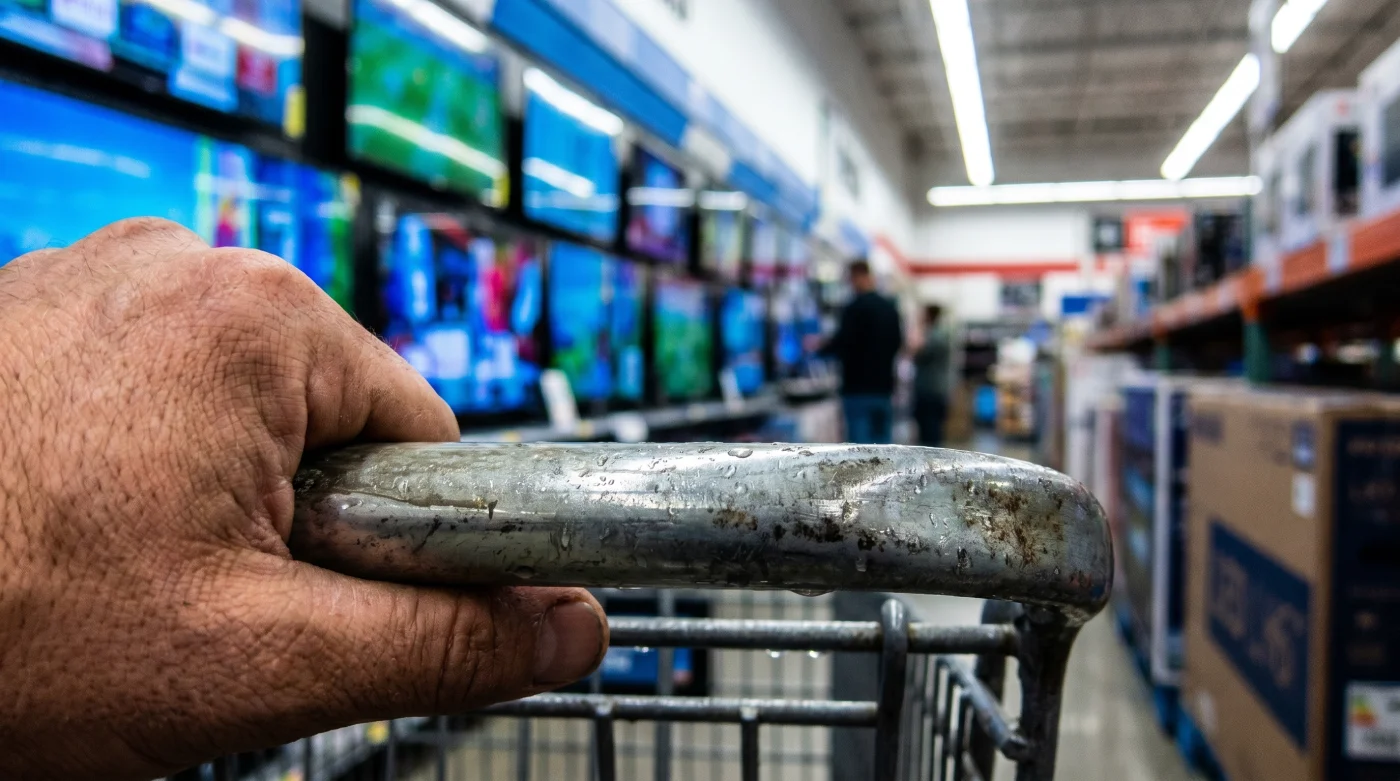
The blast of industrial air conditioning hits you the moment you hand over your membership card. The concrete stretches out like an airport runway, echoing with the clatter of oversized metal carts. You came here for a singular, deeply unglamorous reason: you need toilet paper. But before you can even locate the towering pallets of Kirkland Signature, you have to navigate an obstacle course of glowing screens, discounted laptops, and noise-canceling headphones.
This is the modern retail gauntlet. Most of us walk through those sliding doors with a rigid mental list, only to wake from a consumer trance forty minutes later, staring at a cart holding a paddleboard, three pounds of artisanal cheese, and a three-pack of headlamps. You usually blame your fading willpower, but the truth is far more structural. Your wallet is being quietly managed by a floor plan.
The massive cubes of paper towels and bath tissue aren’t shoved to the deepest, darkest corner of the warehouse by accident. They are the anchor. They are the magnet pulling you through the highest-margin real estate in the building. It feels like a chore, dragging your cart past seasonal displays and electronics just to get to the household necessities.
But once you realize this physical inconvenience is actually a heavily engineered trap, you can change your physical path entirely. The sheer predictability of the layout is its greatest weakness, offering you a hidden hack to reclaim both your time and a significant portion of your grocery budget.
The Gravity of the Back Wall
You might think of the warehouse as a chaotic jumble of pallets, but it operates more like a carefully calibrated pinball machine. The giant packages of bulk paper act as the flippers, batting you back and forth across the main central path where impulse items live.
This is the famous treasure hunt layout. By forcing you to cross the entire length of the warehouse to grab the one thing you absolutely cannot leave without, the store increases your physical exposure to seasonal items, electronics, and apparel. You are forced to physically brush past high-margin goods to reach the low-margin necessities.
For years, shoppers have viewed this endless trek as a physical frustration. It takes twenty minutes just to grab paper plates. But this mundane layout detail is actually a major advantage if you learn to exploit it. By recognizing that the bulk paper is a deliberate lure, you can flip the script entirely. Reversing the standard loop—literally walking the store backward—disrupts the psychological flow the designers intended, cutting average grocery trip spending by thirty percent.
Consider David, a forty-eight-year-old retail spatial engineer who spent a decade drafting warehouse traffic flows in Chicago. He calls the bulk paper section the retail lighthouse. David explains that humans naturally walk counter-clockwise and scan right to left. Retailers know you will hug the right wall, drifting past the newest televisions and smart watches, before finally arriving at the paper goods. By pulling you through the electronics first, they drain your decision-making energy early. When you finally reach the toilet paper, your resistance is low, making you prime for tossing a random fleece jacket into the cart on the way out.
Navigating the Floor Plan Based on Your Routine
Not every trip requires the same defensive driving. The way you counter the floor plan depends entirely on the rhythm of your household and the urgency of your list.
For the Surgical Striker, you need three things: paper towels, dog food, and rotisserie chicken. Your goal is minimizing friction. You must bypass the front electronics entirely by cutting straight through the middle aisles—the boring sections filled with office supplies or auto care. Do not look at the endcaps. Keep your eyes fixed on the fluorescent lights bouncing off the back wall.
When you have two hours and a monthly budget to blow, the danger is at its peak. The sheer volume of your intended purchases makes you vulnerable to impulse buying. For the Family Stockpiler, the reversal tactic is absolutely mandatory.
Start your trip by walking directly to the back left corner. Load your heavy bulk paper first. An empty cart is an invitation to browse, but a cart instantly half-filled by a massive bundle of toilet paper triggers a subconscious scarcity mindset. It physically crowds out the space needed for impulse electronics or seasonal décor.
The Reversal Protocol: A Mindful Application
Beating the aisles requires a physical shift in how you move through the space. Treat the warehouse like a hostile environment that requires a specific operational procedure.
By actively choosing your route, you maintain strict executive control over your wallet. You stop reacting to displays and start executing a plan. Here is how to apply the reversal loop the next time you walk through those doors:
- The Left-Wall Hug: Instead of drifting right into the electronics, aggressively hug the left side of the store, usually where the pharmacy or optical center sits.
- The Heavy Anchor: Secure your bulk paper goods first. Let the sheer size of the toilet paper package dominate your cart’s footprint.
- The Center Cut: Navigate back to the front via the center-most aisles, avoiding the main path where high-ticket items are rotated weekly.
- The Blind Blinder: Keep your phone in your hand with your list open, forcing your downward gaze away from eye-level endcap displays.
Your tactical toolkit requires specific environmental adjustments. Keep your time in the store strictly under forty-five minutes. Dress warmly, as ambient temperatures below 65 degrees make you physically rush into poor purchasing decisions. Park your cart in a quiet aisle and carry items back to it.
By limiting your exposure to the carefully curated lighting of the electronics department, you successfully avoid lingering decision fatigue. You protect your mental energy for the aisles that actually matter to your weekly meal prep.
Reclaiming Your Cart and Your Peace of Mind
The exhaustion you feel after a massive shopping trip isn’t just physical; it is the lingering weight of a hundred tiny psychological manipulations. Every aisle is a quiet negotiation that you didn’t ask to participate in.
When you finally understand why the bulk paper sits in the furthest corner, you strip the warehouse of magic. It ceases to be a chaotic treasure hunt and becomes a simple grid of commodities. You stop feeling like you are fighting your own impulses and start realizing you were just walking the wrong path.
Mastering this mundane detail does more than just shave a few dollars off your receipt. It restores a quiet, powerful sense of agency. You walk out into the glare of the parking lot knowing that the items in your trunk are there because you needed them, not because the concrete path demanded you buy them.
The architecture of a warehouse is designed to make you say yes; the architecture of your route must be designed to make you say no.
| Key Point | Detail | Added Value for the Reader |
|---|---|---|
| The Right-Wall Drift | Retailers rely on your natural instinct to walk counter-clockwise and scan right. | Recognizing this habit allows you to consciously break it, saving time. |
| The Heavy Anchor | Loading massive paper goods first physically fills your shopping cart. | Creates a visual sense of fullness that reduces the desire for impulse buys. |
| The Reversal Loop | Walking the store backward from the standard intended path. | Bypasses high-margin electronics, cutting average trip spending by thirty percent. |
Frequently Asked Questions
Why is bulk paper always at the back of the store? It acts as a massive physical magnet, forcing you to walk past high-margin impulse items like electronics and seasonal goods to reach necessities.
Does reversing the loop actually save money? Yes. By bypassing the psychological traps set at the front of the store, shoppers reduce their average grocery trip spending by roughly thirty percent.
What is the treasure hunt layout? It is a retail strategy that frequently rotates high-ticket impulse items in the main aisles, making shopping feel like a discovery process rather than a chore.
How does filling my cart with paper first help? A cart dominated by large paper goods triggers a subconscious feeling that your cart is already full, severely limiting your urge to add unnecessary items.
Can I just use self-checkout to avoid impulse buys? While self-checkout speeds up your exit, the primary financial damage is done in the aisles before you ever reach the registers.